What Pump Is Best for a Borehole in South Africa?
If you are installing a borehole or upgrading an existing system, one of the most important questions you can ask is this: what pump is best for a borehole in South Africa?
It is a crucial decision because the pump is the working heart of the entire system. You can have a well-drilled borehole with usable water, but if the pump is the wrong type, the wrong size, or poorly matched to your property’s needs, the system can become inefficient, unreliable, and expensive to maintain.
The short answer is that for most residential boreholes in South Africa, a submersible pump is usually the best option. It is designed to operate down inside the borehole, works well for deeper water levels, and is generally the standard choice for domestic borehole systems. But that does not mean the same pump suits every property. The right pump depends on your borehole depth, water level, required flow rate, pressure needs, intended use, power setup, and overall system design.
That is why pump selection should never be reduced to “buy the strongest one” or “choose the cheapest quote.” A pump that is too weak may struggle to supply the house. A pump that is too powerful may over-pump the borehole, waste electricity, and shorten equipment life. The best pump is the one that matches the borehole’s actual yield and your real water demand.
If you are still planning the full project, it also helps to read How Much Does a Borehole Cost in South Africa? and Borehole Pump Installation Cost in South Africa because pump choice affects both your upfront budget and your long-term running costs.
Table of Contents
- Quick answer: what pump is best?
- Why pump choice matters so much
- Main types of borehole pumps
- Why submersible pumps are usually best
- When a surface pump may still make sense
- How to choose the right borehole pump
- Common borehole pump mistakes
- Best pump type by use case
- Running costs and maintenance
- Final answer
- FAQs
Quick Answer: What Pump Is Best?
For most South African residential boreholes, the best choice is usually a submersible borehole pump.
That is because a submersible pump:
- sits down inside the borehole below the water level
- is designed for deeper lifting conditions
- is generally more suitable for household borehole systems
- can provide reliable pressure and flow when correctly sized
- is the most common setup used in domestic borehole installations
But “best” does not only mean “best type.” It also means:
- the right motor size
- the right flow rate
- the right pressure capability
- the right installation depth
- the right match for your borehole’s yield
So the best answer is this: the best pump is usually a properly sized submersible pump matched to the borehole and the property’s actual water needs.
Why Pump Choice Matters So Much
Homeowners often focus heavily on drilling and then treat the pump as just another accessory. That is a mistake. The pump determines how the water actually reaches your home, tanks, garden system, or pressure line. A poor pump decision can cause low pressure, erratic supply, wasted electricity, pump burnout, expensive replacements, and even unnecessary stress on the borehole itself.
Your pump choice affects:
- how much water you can deliver
- how much pressure you get
- how efficiently electricity is used
- how well the pump handles your borehole depth
- how long the system lasts
- how often you need maintenance or repairs
This matters even more if the borehole is supplying a full household system. A small irrigation-only setup has different demands from a house supplying taps, toilets, showers, tanks, filters, and outdoor use. That is why pump choice should be based on the whole system, not just the borehole itself.
Main Types of Borehole Pumps

Although there are several pump configurations on the market, most homeowners comparing borehole pumps are really choosing between two broad categories:
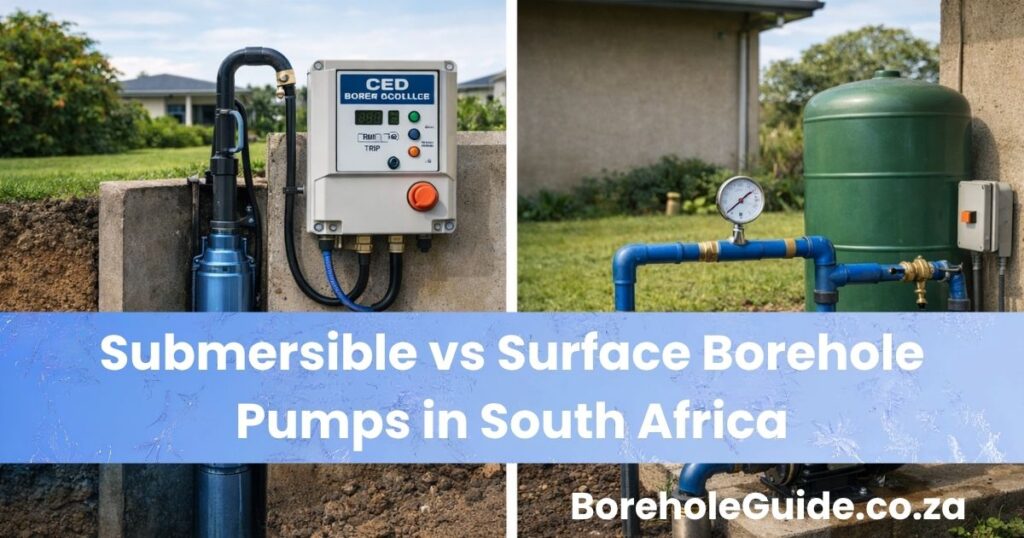
1. Submersible pumps
These pumps are installed down inside the borehole, below the water level. They push water upward to the surface and are commonly used for residential and agricultural borehole systems.
2. Surface pumps
These pumps sit above ground and pull water from the source. They are more limited in lifting depth and are generally better suited to shallower situations, tank transfer, or certain booster roles rather than deeper borehole lifting.
In practical South African residential borehole setups, submersible pumps are typically the main answer for the borehole itself, while surface pumps may still play a role in pressure boosting or moving stored water from tanks.
| Pump Type | Best Use | Main Limitation |
|---|---|---|
| Submersible pump | Deep boreholes and domestic borehole supply | Requires correct sizing and proper installation |
| Surface pump | Shallower lifting, booster use, or tank transfer | Not ideal for typical deeper residential boreholes |
| Pressure booster pump | Improving household pressure from storage or supply line | Usually not the main borehole extraction pump |
Why Submersible Pumps Are Usually Best
For most homeowners, a submersible pump is the best borehole pump because it is designed for the job boreholes actually require.
It works from below the water level, which gives it several practical advantages:
- it is better suited to deeper boreholes
- it does not need to rely on suction in the same way a surface pump does
- it can deliver water more efficiently in typical borehole conditions
- it is generally the standard solution used in domestic borehole installations
Submersible pumps are especially appropriate where:
- the water level is deep
- the home needs steady pressure and flow
- water is being lifted directly from the borehole to the house or to tanks
- the borehole is part of a permanent residential water system
That does not mean every submersible pump is automatically a good choice. A badly sized submersible pump can still cause problems. But as a pump category, it is usually the best answer for a borehole in South Africa.
When a Surface Pump May Still Make Sense
A surface pump is not usually the best main extraction pump for a typical residential borehole, but it can still be useful in certain setups.
For example, a surface pump may make sense when:
- water is first collected into a storage tank
- you need a booster pump for improved household pressure
- the actual lifting requirement is shallow
- the system is designed around stored water rather than direct borehole pumping
In many homes, the most effective system is actually a combination:
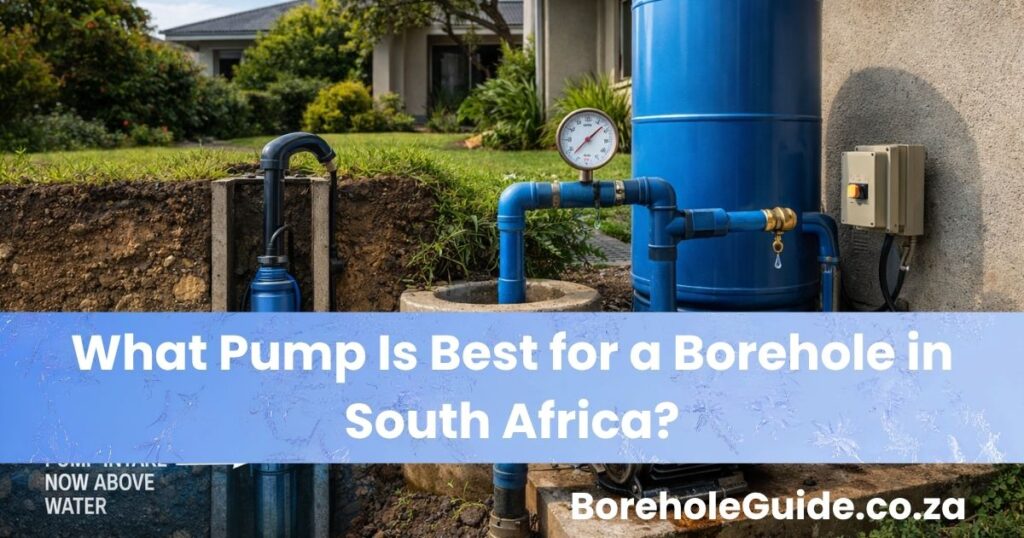
- a submersible pump in the borehole
- storage tanks above ground
- a pressure or booster system supplying the house
That kind of setup can improve consistency, reduce direct stress on the borehole, and make the household water experience feel more stable.
How to Choose the Right Borehole Pump

Choosing the best pump is really about choosing the best match.
1. Know your borehole depth
The total depth of the borehole matters, but so does the water level and pump installation depth. The pump must be capable of lifting water effectively from the real working depth, not just the surface estimate.
2. Know the borehole yield
This is critical. If the borehole yields modestly, the pump should not be sized as though the borehole can supply unlimited flow.
3. Know how the water will be used
Ask whether the system is for:
- garden irrigation only
- household use only
- household plus garden
- tank filling and later pressure boosting
- smallholding or livestock support
Each of these creates different pump requirements.
4. Think about pressure, not just water volume
A home with bathrooms, showers, washing machines, and outdoor outlets needs a practical pressure setup, not just raw water extraction.
5. Match pump size to electrical realities
A more powerful pump is not always better. Bigger pumps can mean higher electricity use, more stress on components, and unnecessary cost if the property does not actually need that output.
6. Plan the full system, not only the pump
The best pump works as part of a complete system that may include tanks, controllers, dry-run protection, filters, and pressure equipment.
| Selection Factor | Why It Matters |
|---|---|
| Borehole depth | Determines lifting requirements and suitable pump type |
| Water level | Affects pump installation depth and operation |
| Yield | Prevents over-pumping and poor pump matching |
| Household demand | Determines required flow and pressure |
| Tank or direct supply setup | Changes system design and pressure requirements |
| Power availability | Affects operating cost and practical pump choice |
Common Borehole Pump Mistakes
Many borehole problems are not caused by the borehole itself. They are caused by bad pump choices or poor system planning.
Choosing the biggest pump available
This is a common mistake. A larger pump can over-pump the borehole, waste electricity, and shorten system life. Bigger is not better if the borehole cannot sustainably support it.
Ignoring the borehole’s true yield
If the pump can pull water faster than the borehole recovers, performance problems begin. This can create the impression that the borehole is failing when the real issue is an incorrect pump match.
Choosing only on price
The cheapest option can become the most expensive if it delivers poor performance, frequent failures, or short life.
Forgetting pressure system needs
Some systems technically pump water but still fail to deliver a good household experience because pressure support was not planned properly.
Not budgeting for controls and protection
Dry-run protection, pressure controls, and correct electrical installation matter. These are not optional extras in a serious borehole setup.
Best Pump Type by Use Case
Best for a standard residential borehole
A correctly sized submersible pump is usually best.
Best for a home using tanks and pressure boosting
A submersible borehole pump feeding tanks, with a booster or pressure pump supplying the house, is often an excellent setup.
Best for irrigation-only or light outdoor use
A submersible pump may still be best if the borehole is deep, but the sizing can often be more modest than a full household system.
Best for shallow transfer or stored-water movement
A surface pump may be suitable where water is already above ground in tanks and simply needs to be moved or boosted.
Running Costs and Maintenance
The best borehole pump is not only about purchase price. It is also about what happens over time.
Your pump affects:
- electricity usage
- maintenance frequency
- repair risk
- component lifespan
- overall water system reliability
This is why a well-matched pump often saves money in the long run even if it is not the cheapest line item on day one. Efficient operation, correct pressure, reduced stress on the borehole, and fewer failure events can make a big difference over the life of the system.
If you are budgeting the full project, also read Total Cost of Installing a Borehole at Home in South Africa and Hidden Costs of Borehole Drilling Homeowners Forget. Both help frame the bigger financial picture around pump selection.
Final Answer
So, what pump is best for a borehole in South Africa?
For most residential properties, the best choice is a properly sized submersible borehole pump.
It is usually the right type because it is designed for deeper borehole conditions, fits the way most domestic borehole systems operate, and can deliver reliable extraction when matched correctly to the borehole and the household’s needs.
But the real key word is not only submersible. It is properly sized.
The best pump is the one that matches:
- your borehole depth
- your water level
- your borehole yield
- your pressure requirements
- your household or irrigation demand
- your broader system design
If those factors are handled properly, you are far more likely to end up with a borehole system that is efficient, reliable, and worth the investment.
FAQs
What pump is usually best for a borehole at home?
For most homes, a submersible borehole pump is usually the best choice because it works well in deeper borehole conditions and suits domestic water systems.
Is a submersible pump better than a surface pump for a borehole?
Usually yes, for the borehole itself. Surface pumps are more useful for shallower lifting, boosting pressure, or moving stored water from tanks.
Can a pump be too powerful for a borehole?
Yes. A pump that is too powerful can over-pump the borehole, waste electricity, and cause performance problems.
How do I know what size pump I need?
You need to consider borehole depth, water level, yield, household demand, and required pressure. The right size is about system matching, not buying the biggest pump available.
Should I pump straight to the house or to tanks first?
Many homes benefit from pumping to tanks first and then using a booster or pressure system. It often improves control and reduces stress on the borehole.
Does the best pump also depend on water use?
Yes. A garden-only setup, a full household system, and a smallholding setup can all require different pump sizing and system design.
Where should I read next on BoreholeGuide?
Good next reads are Borehole Pump Installation Cost in South Africa, How Much Water Can a Borehole Produce in South Africa?, and Borehole Maintenance Checklist.