If your borehole has already been drilled, the next major step is turning that drilled hole into a working water supply. That is where pump installation comes in.
For many homeowners, this is the point where the project starts to feel real. Up to now, the borehole may simply be a hole in the ground with potential. Once the pump is installed properly, the system can begin lifting water, filling tanks, supplying the house, and doing the job you actually invested in it to do.
That is why borehole pump installation matters so much. It is not just about lowering a pump into a borehole. It is about building a functional water system that can work reliably, safely, and efficiently over the long term.
And like many parts of a borehole project, this is where homeowners often underestimate what is involved.
A proper installation may include the pump itself, rising pipe, cable, control box, dry-run protection, delivery lines, electrical connections, valves, pressure components, storage tanks, and testing. If any part of that setup is done badly, the entire system can suffer. Poor installation can lead to weak pressure, pump failures, electrical problems, wasted electricity, unstable supply, and unnecessary repair costs later.
This is why pump installation should never be treated like a minor add-on after drilling. It is one of the most important parts of the whole system.
If you have already read Borehole Pump Installation Cost in South Africa, this article takes the next step. The cost article explains pricing. This guide explains the actual installation process, what happens in each stage, what equipment is involved, and what homeowners should expect from a proper setup.
It also fits naturally with What Pump Is Best for a Borehole in South Africa? and Borehole Pump Sizes Explained in South Africa, because good installation starts with choosing the right pump in the first place.
Table of Contents
- Quick answer: how borehole pump installation works
- Why proper pump installation matters
- What should happen before installation begins
- Step 1: Confirm the borehole details
- Step 2: Choose the right pump and setup
- Step 3: Prepare the pump, pipe, cable, and fittings
- Step 4: Lower the pump into the borehole
- Step 5: Connect the delivery line and surface plumbing
- Step 6: Install the electrical and control components
- Step 7: Connect tanks, pressure equipment, or household supply
- Step 8: Test the system properly
- Common borehole pump installation mistakes
- What homeowners should expect on installation day
- What to check after installation
- Final thoughts
- FAQs
Quick Answer: How Borehole Pump Installation Works
Borehole pump installation usually works like this:
- the borehole details and water conditions are checked
- the correct pump and related components are selected
- the rising pipe, cable, and fittings are prepared
- the pump is lowered to the correct depth in the borehole
- the surface plumbing and delivery line are connected
- electrical controls and protection are installed
- the system is connected to tanks, pressure equipment, or household plumbing
- the full setup is tested and adjusted
That is the short version. The important thing to understand is that a borehole pump installation is really a system installation, not just a pump installation.
Why Proper Pump Installation Matters
Homeowners sometimes focus heavily on drilling and then treat the installation stage as something simple that happens afterward. In reality, installation is one of the biggest factors in how the borehole system will perform day to day.
Proper installation affects:
- water pressure in the home
- pump lifespan
- electrical safety
- system efficiency
- reliability during peak use
- how well the borehole is protected from over-pumping or dry running
- whether the household gets a smooth and usable supply
A bad installation can make a good borehole feel disappointing. A good installation can make a modest borehole work far better than expected.
This is also why installation ties directly into your live pressure article, Borehole Water Pressure Explained in South Africa. Many water pressure complaints are not drilling problems. They are installation and system design problems.
What Should Happen Before Installation Begins
Before the first fitting is tightened or the pump is lowered into the hole, a few important things should already be understood.
The borehole must be drilled and assessed
The installer should know the borehole depth, the water strike information, and ideally the expected or tested yield. Installing a pump without understanding the borehole properly is asking for trouble.
The pump should already be chosen correctly
The installation stage is not the time for guesswork. The installer should know whether the chosen pump is suitable for the borehole depth, pumping level, yield, and intended use.
The system design should be clear
Will the borehole pump directly to the house? Will it fill a storage tank first? Will there be a booster pump or pressure vessel? These decisions affect the whole installation layout.
The electrical plan should be ready
The power supply, protection, cabling, and control arrangement should not be improvised carelessly. A proper electrical plan matters for both safety and pump protection.
This is one reason why How Borehole Drilling Works: Step-by-Step Guide remains an important supporting article. Pump installation is part of the broader borehole process, not something disconnected from it.
Step 1: Confirm the Borehole Details
The first real step in pump installation is confirming the actual borehole conditions.
At a minimum, the installer should know:
- the total borehole depth
- the water level
- the expected pumping level if available
- the borehole yield or practical output
- the diameter of the borehole
- whether the borehole has been cased properly
- what the borehole will be used for
This matters because the pump cannot be installed intelligently without understanding where it should sit and what it is expected to do.
For example, the pump should not be placed so high that it risks pulling air during drawdown, and it should not be placed carelessly without considering sediment or other bottom conditions.
This is also why pump installation is closely tied to borehole yield. A pump must be matched to what the borehole can sustainably provide. If you have not read them already, this article should naturally connect readers to How Much Water Can a Borehole Produce in South Africa? and Borehole Yield Per Hour Explained in South Africa.
Step 2: Choose the Right Pump and Setup
Once the borehole details are known, the installer can confirm the correct pump and overall setup.
This usually means deciding:
- the pump type
- the pump size
- the motor capacity
- the intended installation depth
- whether tanks are included
- whether the home needs a pressure vessel or booster setup
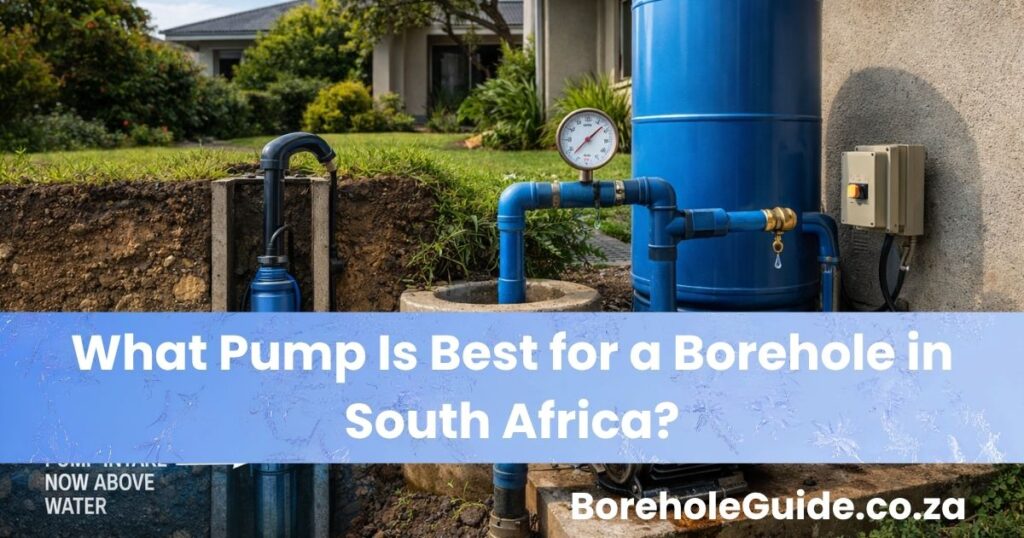
For most residential boreholes in South Africa, a submersible pump is usually the main choice. That is because it is better suited to deeper borehole conditions and domestic water extraction than a standard surface pump. Surface pumps still play an important role in some systems, especially where stored water needs boosting or moving, but they are not usually the main extraction pump for a typical deeper residential borehole.
This is exactly why this article fits naturally with Submersible vs Surface Borehole Pumps in South Africa and What Pump Is Best for a Borehole in South Africa?.
The key point here is that installation only works well if the equipment choice is already correct.
Step 3: Prepare the Pump, Pipe, Cable, and Fittings

Before lowering the pump into the borehole, the installer usually prepares the full pump assembly.
This may include:
- the submersible pump itself
- rising main or delivery pipe
- electrical cable
- joints and couplings
- safety rope or support arrangement where applicable
- non-return valve or check valve if required
- cable ties or cable clips to secure the cable neatly to the pipe
The goal is to create a secure, durable assembly that can be lowered safely into the borehole without twisting, snagging, or placing unnecessary strain on the cable and pipe.
This stage matters more than many homeowners realise. A badly assembled rising pipe or poorly secured cable can create future failure points. Good workmanship here protects the whole system.
Step 4: Lower the Pump into the Borehole
Once the pump assembly is ready, the pump is lowered into the borehole to the correct installation depth.
This is one of the most important steps in the whole job.
The pump must be installed deep enough to remain safely below the working water level during pumping, but not so poorly positioned that it creates avoidable problems. The correct placement depends on the borehole’s real operating conditions, not just the total drilled depth.
During this stage, the installer needs to ensure that:
- the pump is lowered smoothly and safely
- the cable is protected properly
- the pipe joints remain secure
- the installation depth matches the design plan
- the top connection and borehole cap arrangement are handled properly
This is one reason why pump installation should not be treated casually. It is not just a matter of “drop the pump in and switch it on.” Positioning matters.
And if the pump is badly placed relative to the water level and yield, the system may later suffer from poor performance or dry-run risk. That is one reason this article also supports Can Boreholes Run Dry in South Africa?.
Step 5: Connect the Delivery Line and Surface Plumbing
Once the pump is in place, the next step is connecting the water delivery side of the system above ground.
This usually means connecting the rising main from the borehole to one of the following:
- a storage tank
- a pressure vessel system
- household plumbing
- an irrigation line
- a combination of these, depending on the setup
This is where the design philosophy of the system starts to show.
Some borehole systems pump directly into the house. Others fill storage tanks first and then use a separate pressure pump or booster arrangement to supply the home. In many cases, the second option creates a more stable and forgiving system, especially where borehole yield is modest or the home wants more consistent day-to-day pressure.
That is why this article also ties naturally into Borehole Water Pressure Explained in South Africa. Good installation is not only about getting water out of the hole. It is about delivering that water properly where it needs to go.
Step 6: Install the Electrical and Control Components
This is one of the most important and most overlooked stages.
A borehole pump system needs proper electrical installation, not just power.
Depending on the setup, this stage may include:
- connecting the pump power cable
- installing the control box or controller
- adding overload protection
- adding dry-run protection
- adding surge or lightning-related protection where appropriate
- connecting pressure switch or pressure controller equipment
- ensuring the system is wired safely and legally
This stage is critical because electrical faults and pump protection failures are some of the fastest ways to damage a borehole system.
Many hidden costs and future maintenance issues begin here if shortcuts are taken. That is why readers should also be directed to Borehole Pump Installation Cost in South Africa and Borehole Cost Calculator South Africa when they are planning the budget side of the job.
Step 7: Connect Tanks, Pressure Equipment, or Household Supply
At this stage, the installation moves from pump setup to full system setup.
If the property uses storage tanks, they need to be integrated properly. If the system uses a pressure vessel, pressure switch, or booster arrangement, those components need to be installed and set correctly.
Depending on the system design, this step may include:
- float controls for tanks
- pressure vessel installation
- booster pump connection
- pressure switch or pressure controller setup
- non-return valves
- household supply connections
- basic filtration components if included
This is one reason why good borehole systems often feel “engineered” rather than improvised. The pump alone does not create a good household experience. The entire delivery system has to work together properly.
If pressure stability is part of the homeowner’s concern, this section should naturally push them toward Borehole Water Pressure Explained in South Africa.
Step 8: Test the System Properly

Once the installation is physically complete, the system should be tested properly before being treated as finished.
This testing stage may include:
- checking whether the pump starts and runs correctly
- checking water delivery and flow
- checking for leaks
- checking control and protection operation
- checking pressure behaviour
- checking tank filling and shutoff behaviour if tanks are included
- checking whether the household supply behaves as expected
This stage matters because installation issues often show themselves here. A system that looks neat physically may still have poor pressure, bad control settings, incorrect switching, or unstable performance if it is not tested properly.
Testing also gives the installer and homeowner the chance to confirm whether the system is behaving in a way that matches the borehole’s yield and the home’s expected usage.
Common Borehole Pump Installation Mistakes
Many long-term problems start with mistakes made during installation. Some of the most common include:
Using the wrong pump for the borehole
This is a design mistake before it becomes an installation mistake. The installation cannot rescue a badly chosen pump.
Installing the pump at the wrong depth
If the pump sits too high or is not matched to the real pumping level, it may pull air or behave inconsistently under demand.
Poor cable and pipe handling
Badly secured cables, weak joints, or careless installation can create avoidable failure points.
Skipping proper protection equipment
Dry-run protection, overload protection, and safe control systems are not optional luxuries.
Weak pressure system design
A pump may technically work, but the home may still experience poor pressure if the pressure side of the system is underdesigned.
Ignoring the role of storage tanks
Some systems would perform far better with tank buffering, but the installation is forced into a direct-to-house design that is less forgiving.
Not testing the full system properly
Finishing the plumbing and wiring is not the same as proving the system works well in real use.
These mistakes are also why your Borehole Maintenance Checklist matters even after installation. Many “maintenance problems” are really poor-installation problems revealing themselves later.
What Homeowners Should Expect on Installation Day
Most homeowners do not need to know every technical detail, but they should know what a professional installation day generally looks like.
You should usually expect:
- equipment arrival and site preparation
- confirmation of the borehole details
- pump assembly and preparation
- controlled lowering of the pump
- surface plumbing work
- electrical connection and controller setup
- pressure or tank integration where relevant
- testing and basic explanation of the finished system
You should also expect questions or decisions around:
- where tanks should sit
- how the household will be connected
- whether the system prioritises storage, direct supply, or both
- what level of pressure performance you want
- what protection features are included
A good installer should not treat the job like a rushed mechanical drop-in. They should treat it like the setup of a working water system.
What to Check After Installation
Once the system is installed, a homeowner should not just walk away and assume everything is perfect forever.
After installation, it is wise to check:
- whether the water pressure feels stable
- whether tanks fill and stop properly
- whether the pump cycles too often
- whether there are visible leaks
- whether the household can use water normally under real conditions
- whether the system behaves differently under heavy use
You should also understand the basics of what has been installed:
- where the controller is
- what protection systems are in place
- how to isolate the system if needed
- what signs suggest a problem
- who to contact if the pump or controls behave abnormally
This is where maintenance awareness starts from day one, not only months later after something has gone wrong.
Final Thoughts
So, how does borehole pump installation work step by step in South Africa?
It starts with understanding the borehole properly. Then it moves through pump selection, assembly, lowering, plumbing, electrical setup, pressure integration, and system testing.
But the real lesson is bigger than the steps themselves.
Borehole pump installation is not just a technical add-on after drilling. It is the stage that turns a borehole into a working water system. That means it affects comfort, pressure, reliability, efficiency, protection, and long-term value.
A properly installed system can make a borehole feel strong, stable, and dependable. A poor installation can make even a decent borehole feel disappointing.
That is why the smartest homeowners treat pump installation as one of the core parts of the whole project, not as a small finishing job at the end.
FAQs
How is a borehole pump installed?
A borehole pump is usually installed by confirming the borehole details, assembling the pump and rising main, lowering the pump into the borehole, connecting plumbing and controls, and then testing the full system.
Is borehole pump installation just dropping a pump into the hole?
No. A proper installation includes pump placement, plumbing connections, electrical setup, protection systems, pressure control, and testing.
What type of pump is usually installed in a borehole?
For most residential boreholes in South Africa, a submersible pump is usually the main extraction pump.
Do I need tanks with a borehole pump installation?
Not always, but many systems perform better when the borehole fills storage tanks first and the house is supplied from a pressure-managed setup.
Why is testing important after installation?
Testing helps confirm that the pump, pressure system, controls, and plumbing all work properly before the system is treated as complete.
Can bad installation cause poor water pressure?
Yes. Many pressure problems are really installation or system design problems rather than drilling problems.
What should I read next on BoreholeGuide?
Good next reads are Borehole Pump Installation Cost in South Africa, What Pump Is Best for a Borehole in South Africa?, and Borehole Water Pressure Explained in South Africa.